
Allegany County Arrest Log Sources
Allegany County agencies publish no complete 72-hour or weekly arrest log. What exists is scattered across local news and official custody tools. The Sheriff's inmate search shows who is in the jail now. It is not an archive of every arrest in the county. Wellsville Regional News posts Wellsville Police material whenever a release comes in. Allegany County Sheriff's Office releases run there too. The Wellsville Sun also publishes selected police stories. So do Solomon's Words for the Wise and the Olean Times Herald. None follows a fixed schedule. None speaks for county custody.
That mix of news and custody tools shapes how any log should be read. One news post may bundle arrests from several dates. It may mention an appearance ticket or note that someone went to Allegany County Jail. Publication often trails the event itself. The roster answers a narrower question: whether the person is in county custody right now. Neither source gives the court outcome. Keep every date and custody claim tied to whoever published it.
Read Allegany County Arrest Reports
Start with the agency and the event date. Skip the headline. A "police blotter" item may cover just one village department. Sheriff's posts reach other parts of the county. State police events may follow a different release path entirely. Work backward through the source with these checks:
- Identify the named police or sheriff agency and the town or village stated.
- Record the article's publication date, then find each event or arrest date in the text.
- Preserve procedural terms such as appearance ticket, arraigned, released, or remanded.
- Check the official Sheriff roster only if present county custody is the question.
- Use the court or a narrow records request for later disposition or an older agency record.
This approach avoids a common mistake. "Remanded" means a judge ordered the person held. An appearance ticket just directs someone to show up later, so it proves nothing about current jail custody. For a booking that likely happened today, use the 24 Hour Arrests process instead of waiting on a story. The multi-day page serves a different purpose. Use it for chronology, delayed releases, and comparing sources.
Allegany Arrest Log Entry Fields
No single county blotter schema exists here. The useful fields come from the report itself and from the official booking record. Keep the two separate. A narrative can name the arresting agency, the place, the charge, the court, and the stated release result. A Sheriff detail page may add a booked time, an inmate ID, bond fields, and an image. A newspaper photo is not always a booking photo. Local reports do not form a current photo gallery.
| Log field | How to read it |
|---|---|
| Outlet and publication date | Shows when and where the account appeared, not when custody began. |
| Agency and event place | Identifies the reported jurisdiction when the article supplies it. |
| Arrest, charge, or booking date | May differ from the story date and from each other. |
| Charge wording | An alleged charge as reported, never a finding of guilt. |
| Release, ticket, or remand language | A dated procedural statement that must be checked for present status. |
| Photo | Source-dependent and not proof of identity, guilt, or current custody. |
Note: Put the event date and publication date in separate notes whenever one article combines several Allegany County incidents.
Why Allegany Blotter Dates Differ
Wellsville Regional News shows how posting works in this county. One Wellsville Police article may group several event dates together. A Sheriff's report may run days after the arrest it describes. The outlet promises no fixed daily schedule. A quiet stretch does not mean nobody was arrested. A busy post does not mean everything happened that morning. The county Sheriff's Office blotter example shows the gap between event date and publication date.
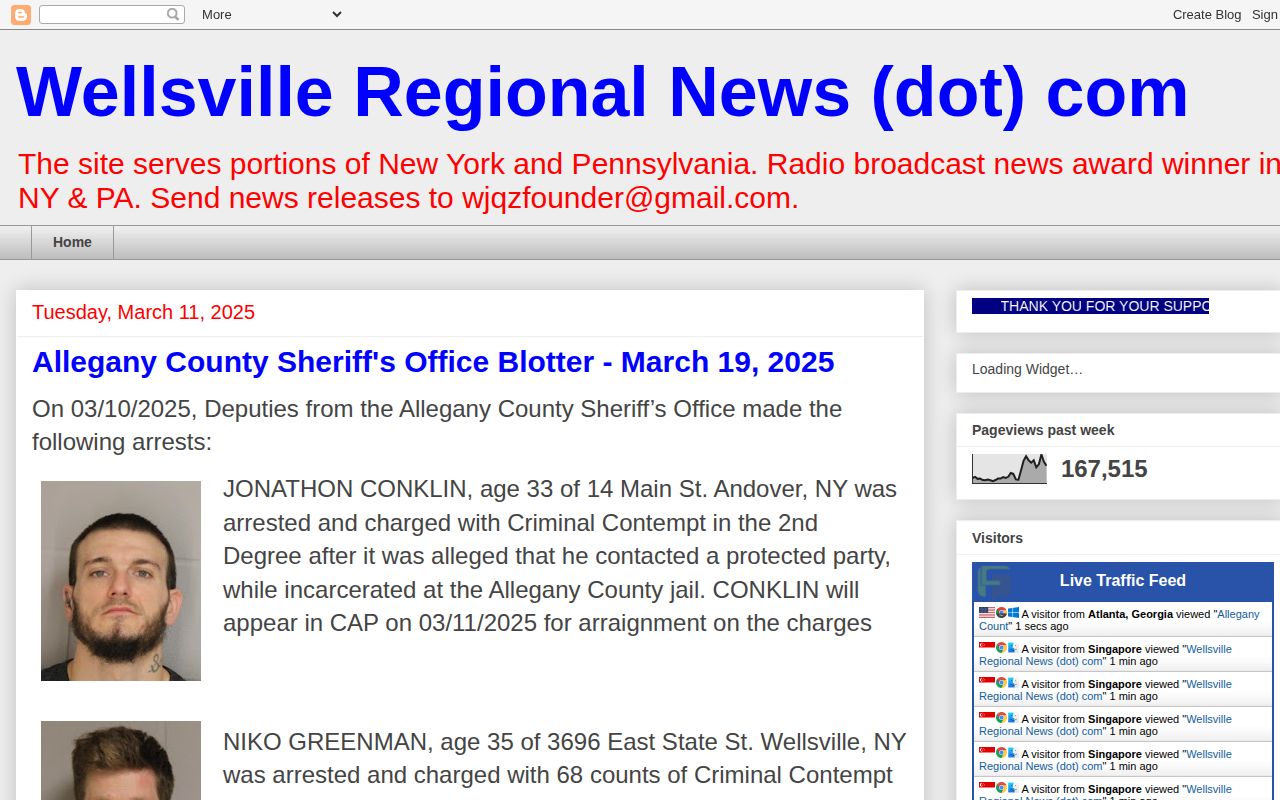
That older blotter helps you learn the report format. It cannot tell you who sits in the jail now.
Weekends and holidays need the same care. The Sheriff posts no special weekend roster rule, and news outlets run stories as material arrives. Posts can bunch up after days when courts and offices run different schedules. Search the event date range on both sides of the weekend. Then check current custody through the official roster. The court alone supplies the case outcome.
Allegany Arrest News Is Secondary
The Wellsville Sun writes story-driven police coverage, often using terms like arraigned, remanded, or released. Solomon's Words carries occasional Wellsville blotters and Southern Tier reports. The Olean Times Herald holds historical regional police coverage. These outlets add narrative that a roster card lacks. Their archives remain incomplete, though, and old words cannot confirm present custody. Coverage runs strongest around Wellsville and selected incidents, with no sign of full Alfred or Belmont reporting. The Wellsville Sun arrest-story example shows how prose handles arrest and arraignment.
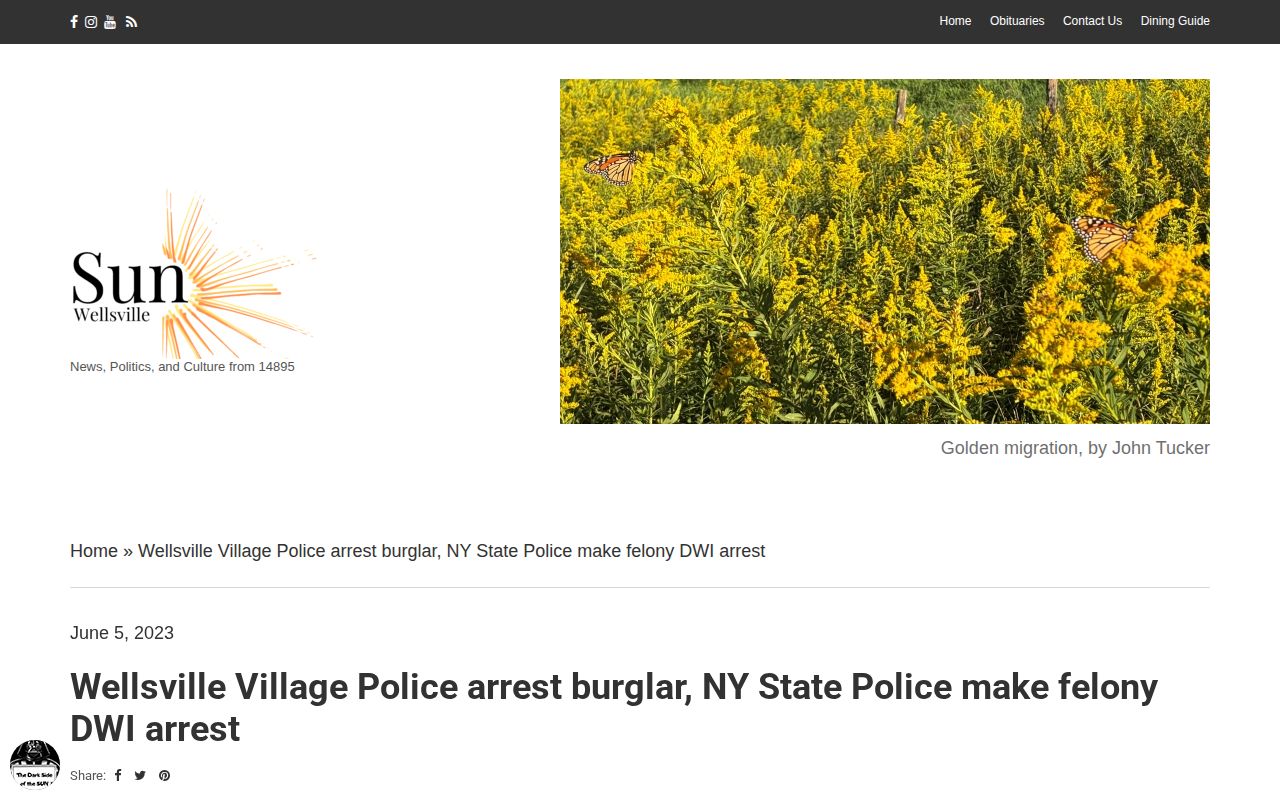
Read the full article for its date, agency attribution, and stated court step. A headline alone will not do. Solomon's Words Wellsville police blotter offers a second regional example.

That independent report may preserve court dates and transport details. Still, agency, jail, and court records come first.
Allegany Roster Is Not an Archive
The Allegany County sheriff's OCV page shows ten records, newest first. That layout helps you scan fresh bookings. It does not cap detention at ten people. Nor does it preserve any weekly history of Allegany County arrests. The office publishes no refresh schedule. There is no weekend rule or post-release policy either. A name can vanish without explanation. The legacy county search form sits apart from all this. It currently returns no live results.
Treat these two tools as separate instruments, not one archive. For who is in custody now, the OCV page leads. The old form works as a fallback for name lookups or outages. Suppose a report says someone was arrested in Allegany County. Yet neither interface shows them. Release, transfer, or a different spelling could explain the gap. Call the Jail Division at 585-268-9200 to confirm present custody. For a historic booking record, ask the records custodian directly.
Find Older Allegany Arrest Records
An old arrest record and a live roster are different animals. New York's LGS-1 retention schedule draws the line. Under State Archives item 1220, certain incident, complaint, and arrest summary logs stay on permanent retention. That holds when their data never went to DCJS. Case files follow their own minimum periods. Those depend on record type and how the matter ended. Even so, a retention rule governs files on a shelf. It never promises a name or booking photo stays on a public webpage.
Want an older official record in Allegany County? File through the Allegany County FOIL route. State a bounded date range, the person's name as reported, the agency, and the exact record type. Ask whether the Sheriff still holds it. Ask whether he passed it along, or disposed of it under the adopted schedule. Court papers travel a separate path through the court clerk. Some outcomes are sealed and stay outside any public response.
Note: A permanent retention rule for one type of arrest summary does not make every case file, booking image, or web entry permanent.
Verify Allegany Arrest Log Outcomes
Think of the arrest log as a story told in stages. The arrest starts it. Booking documents the jail intake. Arraignment opens the court phase. Disposition closes the account with how the case actually ended. A roster entry usually captures only the first two steps. Later court filings remain the place to check outcomes, so let them correct the earliest headline rather than trusting it as final.
Unofficial booking sites copy Allegany County entries too. They make poor custody tools all the same. Dates shift, counts drift, and city labels are often guesses. A copied booking photo can linger long after the official display drops it. Official agency records should always lead. Local journalism adds a dated narrative. The court handles everything that follows. Keep those roles straight and your multi-day arrest log picture stays accurate.